Content Creators vs Influencers: What Makes Them Different?
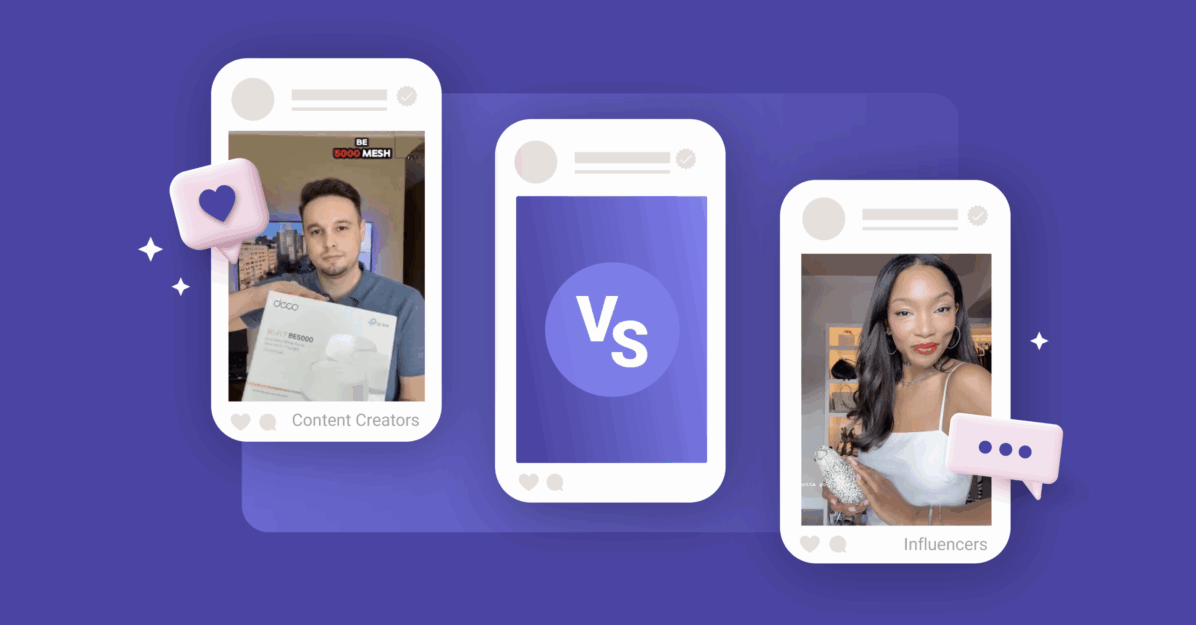
The global creator economy was valued at US$205.3 billion in 2024 and is projected to skyrocket to US$1,345.5 billion by 2033, growing at a ~ very casual ~ 23.3% CAGR along the way (Grand View Research really said “up and to the right”). With numbers like that, it’s no surprise brands are sprinting to get a piece of the creator pie, but many are still mixing up content creators and influencers like they’re the same thing.
They’re not.
Well… not always.
Even though the terms get tossed around interchangeably, creators and influencers play different roles, bring different strengths, and deliver different kinds of value. And understanding those differences is crucial if you want campaigns that actually hit.
And here, we’re breaking it all down: what truly separates content creators from influencers, how each works, what their goals and revenue streams look like, how hybrid creators fit into the picture, and – most importantly – how brands can choose the right partners for the right moments.
If you’re a brand looking to leverage creator marketing, AdParlor can help you find the right voices to tell your story – reach out here!
Table of Contents
Content Creators vs Influencers: Key Differences
Content Creators vs Influencers: Can You Be Both?
Choosing Between Content Creators and Influencers: What Brands Should Know
Future Trends: Are Content Creators the New Influencers?
Who is a Content Creator?
In 2025, a content creator is someone who crafts original content – whether that’s long-form videos, podcasts, blogs, or highly produced social posts – with a strong emphasis on storytelling, expertise, and value. Unlike someone posting for quick engagement, content creators think deeply about their narrative, their audience, and the quality of what they produce.
For brands, creators are powerful partners. They produce content that isn’t just promotional, but evergreen, meaning it continues to drive engagement and value long after it’s published. Because creators often specialize in a niche, like travel, gaming, or finance, they build real authority. When they work with brands, they bring this trust and expertise to the table, resulting in more meaningful, long-term content partnerships.
Key Traits of a Content Creator
- Original Storytelling
Creators aren’t just sharing “look what I got” moments; many build deep narratives. They tell stories over time, teach something, or share a unique point of view, helping them connect with audiences in a more meaningful way. - High Production Quality
Their content often has polish: well-edited video, scripted or planned structure, thoughtful design, and professional-grade aesthetics. It’s not just “record and post”; there’s craft involved. - Niche Expertise
Many creators carve out a specialty. Whether it’s makeup tutorials, productivity advice, or travel vlogs, these creators become “go-to” voices in their domain. That specialization increases their credibility. - Platform Consistency
These creators are consistent – they show up regularly on their platforms, maintain a cohesive voice, and build familiarity. Their audience knows what to expect. - Audience-First Approach
Creators prioritize their community in every piece of content. Their work often focuses on education, entertainment, or inspiration, delivering value that goes beyond any single brand partnership. While monetization is part of the picture, creators build trust and loyalty by putting audience needs and interests front and center.
Who Is an Influencer?
An influencer is someone who has built a dedicated following on social media and can drive action through their authority and voice. Their power lies in their ability to persuade, whether that’s influencing purchase decisions, shaping trends, or creating brand awareness.
In marketing campaigns, influencers often serve as the bridge between brands and consumers. They’re tapped for reach, engagement, and conversion. Brands lean on them to amplify product launches, generate social proof, and connect with target audiences in a more personal, trusted way.
Key Traits of an Influencer
- Audience Engagement
Influencers frequently communicate with their followers through comments, DMs, polls, stories, or live content. That two-way relationship builds trust and authenticity. - Trend Responsiveness
Because of their constant immersion in social platforms, influencers are often the first to adopt viral trends, memes, or platform-specific formats. They adapt quickly to what’s “hot.” - Brand Alignment
Influencers often choose partnerships that align with their personal brand. Their credibility stems in part from authentic connections, so brands that align with their values or lifestyle are more likely to resonate. - Promotion-Driven Content
While influencers often feature more promotional content, like product reviews, affiliate links, and sponsored integrations, this doesn’t mean they’re “just selling.” Influencers typically choose partnerships that genuinely align with their personal brand, values, and audience needs. Their strong calls to action come from real enthusiasm and trust in the products they share, not from being sellouts. When an influencer promotes something, it’s usually because they’ve vetted it, use it, and believe their audience will benefit. - Follower-Based Influence
Their social proof matters: follower count, engagement rate, and perceived authority are key to their value. Brands often evaluate them based on reach and influence.
Content Creators vs Influencers: Key Differences
Creators and influencers exist in the same ecosystem, but they aren’t interchangeable, and they aren’t symmetrical. A creator can absolutely become an influencer as their work gains traction, but an influencer isn’t always a creator in the craft-driven sense. They share platforms, audiences, and often brand partnerships, yet they can operate with different intentions, skill sets, and value propositions. Understanding this overlap and the distinctions is essential for brands deciding who to partner with and why.
Content creators tend to approach their work with an emphasis on storytelling, education, and community-building. Their intention is often rooted in craft: producing videos, blogs, podcasts, or series that deliver value beyond a single promotional moment. The Influencer Marketing Hub 2025 Creator Earnings Report shows that many creators define success in terms of audience connection rather than revenue-based metrics, emphasizing depth over breadth. This is reflected in the type of content they publish; usually long-form, niche, and highly produced, built for evergreen discoverability rather than short-term virality. Their communities often view them as trusted experts or guides within specific verticals, which gives their recommendations a unique level of credibility.
Influencers, on the other hand, center their work around visibility, inspiration, and persuasion. Their primary goal is to spark action, whether that’s awareness, product interest, or outright conversion. Because their value lies in their reach and social authority, influencers typically lean into short-form formats, trends, and promotional hooks that drive immediate engagement. Their content style is shaped by platform algorithms and cultural moments, making it more reactive than the creator’s deliberate, narrative-driven approach.
Audience differences
These differing intentions naturally influence the kind of engagement each group cultivates. Creators tend to foster smaller but deeply loyal audiences that show up consistently for long-form content and community interactions. Influencers often maintain broader, more diverse audiences and engage frequently through Stories, polls, comments, and DMs, but the relationship may be more superficial than the creator-led niche community. This dynamic is reflected in how brands evaluate talent; the State of Creator Marketing 2024-2025 report from CreatorIQ shows that brands now increasingly prioritize engagement quality over audience size, particularly in creator partnerships.
Monetization also looks very different across the two groups. Creators typically rely on multiple income streams, including platform subscriptions, tipping, memberships, paid communities, and long-form brand partnerships. Platforms have leaned into this model, expanding in-app monetization tools throughout 2025. However, monetization remains inconsistent; a 2024 MASV study found that 75% of creators surveyed had not received payment for at least some of the content they produced, highlighting the ongoing volatility in creator-led business models.
Influencers, by comparison, operate within a more traditional promotional revenue structure: sponsored posts, affiliate marketing, collaborations, and product placements. Lumanu’s 2025 payout analysis shows wide variation in compensation depending on platform and content format, but overall, the model remains largely campaign-driven.
Ultimately, these differences matter because creators and influencers deliver distinct types of brand value. Creators bring depth, trust, and long-term relevance, while influencers deliver scale, momentum, and measurable activation. Understanding these nuances helps brands select the right partner for their goals, whether that’s evergreen storytelling, short-term buzz, or a sophisticated mix of both.
Content Creators vs Influencers: Can You Be Both?
The line between content creators and influencers has never been blurrier, and in 2025, most digital personalities fall somewhere in the middle. As platforms push creators toward multi-format publishing and brands increase budgets for long-term partnerships, many individuals now operate as hybrid creators: they produce thoughtfully crafted creator-generated content while also influencing purchasing decisions through their audience relationships. A YouTuber might release a beautifully edited documentary-style video one week and post a sponsored Instagram Reel the next. Both roles can coexist, and for many, that duality is a core part of their business model.
So what determines whether someone is primarily a content creator or an influencer? It often comes down to intention. Creators are driven by craft, originality, and storytelling; their identity is shaped by the content they build. Influencers, on the other hand, are defined by the trust and visibility they hold with their audiences – the ability to inspire a reaction or purchase. A person might be a creator on YouTube, where they release long-form, highly produced videos, yet function more as an influencer on TikTok or Instagram, where their audience engages with them through quick, relatable updates or branded promotions. Identity shifts based on platform norms, format, and audience expectations.
A great real-world example is Dalton Hunter, the travel and outdoor creator behind Travel With Dalt. His YouTube channel and blog lean heavily into cinematic travel storytelling and detailed destination guides, unmistakably creator-led work. But he also partners with major brands across social – tourism boards, outdoor gear companies, travel services, and hospitality brands – using his influence to drive visibility and action. Dalton embodies what many modern digital personalities have become: a creator and an influencer, seamlessly shifting between the two depending on the platform, the content, and the partnership.
Choosing Between Content Creators and Influencers: What Brands Should Know
When brands plan a campaign, the first and most important step is defining their goals. Are you aiming to build long-term brand equity, educate your audience, or increase awareness? Or is the priority to spark immediate engagement through product launches or viral moments? The type of partner – whether creator, influencer, or a hybrid – should align directly with these objectives. The most effective campaigns treat talent as strategic collaborators, leveraging their unique strengths to craft meaningful content and cultural moments that resonate with audiences over time.
Partner with creators if…
If your campaign leans toward high-quality storytelling, deep audience trust, and a cohesive ongoing narrative, partnering with content creators is often your strongest move. In 2025, brands increasingly prioritize long-term creator relationships over one-off activations, not just for authenticity, but for efficiency. Creators deliver polished, purpose-driven content and can produce cost-effective UGC and creator-generated assets that refresh your brand’s library across paid, organic, and website channels. This mix of craft, consistency, and scalable content production helps brands stay culturally relevant while building a deeper connection with the creator’s community.
Partner with influencers if…
On the flip side, if your campaign is about scale, immediate buzz, or product launches, influencers can deliver in a big way. Their strength isn’t just in the content they create, it’s in their reach. Influencers excel at tapping into platform trends, driving short-form engagement, and quickly rallying large audiences around a product or moment. According to Ad Age’s 2025 report, 40% of creators and influencers tracked by CreatorIQ participated in multiple campaigns, signaling a broader industry shift toward longer-term influencer partnerships rather than one-off activations.
Most importantly, don’t reduce creators to follower counts alone. CreatorIQ’s 2024-2025 State of Creator Marketing report shows that engagement rate and brand fit now outweigh raw audience size, with smaller, mid-tier creators (i.e., 100K-300K followers) being especially valuable. Their engagement and alignment often deliver a stronger ROI per dollar than mega influencers. Just as crucial: Creators want authentic alignment and real partnership. 84% say product quality is the top reason they agree to a collaboration, and 99% say creative freedom is non-negotiable. Many also prefer long-term relationships over one-off deals, since ongoing partnerships allow them to tell better stories, build trust, and create content that feels genuinely integrated into their world.
Future Trends: Are Content Creators the New Influencers?
The creator economy is evolving fast, not just in scale, but in structure. Rather than another revenue forecast, what’s notable is how creators are transforming into full-fledged businesses and, increasingly, brand partners with long-term value. 87% of creators now take brand alignment into account when deciding whether to work with companies, indicating that authenticity and shared values are major motivators.
A big driver of this shift is platform transformation. Short-form video remains king across TikTok, Instagram, and YouTube Shorts, and creators are using AI tools to produce more content with greater efficiency. At the same time, more monetization options ( subscription models, tipping, native storefronts, etc.) are empowering creators to scale sustainably. Creators are increasingly prioritizing partnerships that support long-term business growth, with panel data indicating that creators value creative control, transparent communication, and authentic brand alignment as top partnership factors. These priorities reinforce the broader shift toward sustainable creator-brand relationships rather than one-off influencer-style promos.
But perhaps the most exciting trend; creators are becoming mini media companies. Many are building teams, expanding into new content formats, launching product lines, and even operating as agencies. This model reflects what CreatorIQ calls “sustainable creator partnerships,” in which creators don’t just promote brands, they co-create with them.
And brands are taking notice. Instead of dipping their toes into influencer marketing, more are investing in long-term creator relationships to build meaningful, authentic narratives. This shift reflects a growing recognition that creators deliver more than reach: they deliver trust, coherence, and ROI over time.
FAQs
No. Although the terms overlap, they aren’t identical. Content creators focus on producing high-quality, story-driven material that delivers value over time and may or may not have a sizable following. Influencers prioritize audience engagement, reach, and driving action, often through trend-driven or promotional content. Many creators can be influencers, but not all influencers are creators.
It depends. Top influencers can earn substantial sums from sponsorships and affiliate marketing, while creators often diversify income through subscriptions, memberships, and long-form branded content. Earnings vary widely based on platform, audience size, niche, and monetization strategy.
Trust is context-dependent. Both creators and influencers can be credible, but it often hinges on niche expertise, authenticity, and audience alignment. Consumers may perceive creators as more legitimate for specialized topics due to their focus on quality and authority.
For long-term brand equity, both creators and influencers now play strategic but different roles. Influencers are increasingly powerful long-term partners because audiences trust their authentic, repeated recommendations, driving both awareness and sustained purchase behavior over time. Creators, meanwhile, excel at producing high-quality, cost-efficient content that keeps brands culturally relevant and visually fresh. If your primary KPI centers on content generation, evergreen storytelling, or refreshing your asset library, creators often deliver more efficiently.
Final Thoughts
Content creators and influencers each bring their own superpowers to the marketing table. Creators thrive on storytelling, niche expertise, and high-quality content that builds long-term trust; they’re the ones crafting the vibes and the value. Influencers, meanwhile, bring the heat with reach, engagement, and instant action, making them perfect for buzzy launches and viral moments. And honestly? In 2025, most digital personalities are playing both lanes anyway – creator one day, influencer the next. Knowing the difference (and the overlap) helps brands pick the right partner for the right job, instead of forcing a one-size-fits-all strategy.
Ready to amplify your brand? Partner with AdParlor to design campaigns that leverage both creators and influencers for authentic, measurable results.